

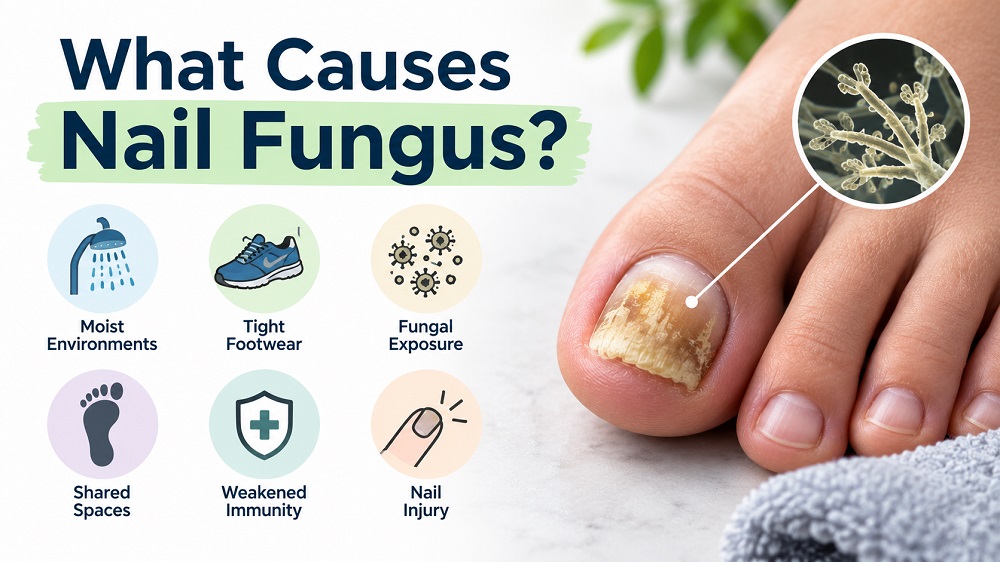
Nail fungus — medically known as onychomycosis — is one of the most common nail conditions seen across the United States, affecting fingernails and toenails alike. It often starts small: a white or yellowish spot beneath the tip of the nail that most people barely notice at first. Left alone, it can spread deeper into the nail, causing discoloration, thickening, and crumbling edges. This guide breaks down exactly what causes nail fungus, who’s most at risk, and how to lower your chances of getting it.
What Exactly Is Nail Fungus?
Nail fungus is a fungal infection that takes hold in the nail plate or in the skin directly beneath it. Rather than appearing all at once, it tends to creep in quietly — a faint white or yellow-brown discoloration near the tip of the nail is usually the first sign, and it’s easy to mistake for a stain or a minor injury in the early days.
Over weeks and months, the infection works its way deeper into the nail bed. The nail gradually thickens, turns brittle or ragged at the edges, and can take on a dull yellow, brown, or even greenish tint. In more advanced cases, the nail may start pulling away from the skin underneath it entirely. Toenails bear the brunt of this condition far more often than fingernails, mainly because feet spend so many hours each day sealed inside socks and shoes — exactly the dark, warm, damp setting that fungal organisms need to multiply.
What Organisms Actually Cause Nail Fungus?
Most cases trace back to a family of fungi called dermatophytes. These organisms have a particular appetite for keratin, the tough structural protein that makes up nails, hair, and the outer layer of skin, which makes nails an easy target once the fungus gets a foothold.
Dermatophytes aren’t the only possible cause, though. Certain yeasts and molds can infect nails in much the same way, particularly in people whose nails are already weakened or damaged. Bacteria can occasionally be responsible too, and this is worth knowing because a bacterial infection behaves a little differently — it tends to turn the nail a distinctive green or black, rather than the yellowish-brown shade typical of a fungal infection, which can help a doctor narrow down the cause during an exam.
How Does Nail Fungus Spread?
Unlike a cold or the flu, nail fungus rarely jumps directly from one person to another through casual contact. Instead, it spreads mainly through shared surfaces and objects that stay damp and warm long enough for fungal spores to survive — gym locker room floors, communal shower stalls, swimming pool decks, and even nail clippers or files that get reused between people without being disinfected.
There’s also a close relationship between nail fungus and athlete’s foot. A fungal infection that starts on the skin between the toes can migrate into the toenail itself, and once it’s established in the nail, it can reinfect the surrounding skin — creating a cycle that keeps the infection going unless both the skin and the nail are treated.
Who Is Most at Risk of Developing Nail Fungus?
Anyone can develop nail fungus, but some people are considerably more prone to it than others. Age is one of the biggest factors — as nails age, they grow more slowly and become drier and more brittle, which creates tiny cracks that give fungi an easy way in. Lifestyle habits matter too: feet that sweat heavily inside tight, non-breathable shoes, or bare feet walking across damp public floors, both raise exposure significantly. The table below breaks down the most common risk factors and the reasoning behind each one.
| Risk Factor | Why It Raises Risk |
|---|---|
| Older age | Nails grow more slowly and become more brittle, creating cracks fungi can enter |
| Heavy foot sweating | Moist shoes create an ideal breeding ground for fungi |
| History of athlete’s foot | The same fungus can migrate from the skin to the nail |
| Walking barefoot in public showers or pools | Direct exposure to fungal spores on damp surfaces |
| Minor nail or skin injury | Breaks in the nail or surrounding skin give fungi an entry point |
| Psoriasis or other nail-affecting skin conditions | Already-compromised nails are more vulnerable |
| Diabetes, poor circulation, or weakened immune system | The body has a harder time fighting off the infection |
Why Are Toenails More Commonly Affected Than Fingernails?
The gap between how often toenails and fingernails get infected comes down to environment and biology. Toes spend most of the day shut inside socks and shoes, an enclosed space with little airflow where warmth and moisture build up steadily — ideal conditions for fungal growth. Fingernails, by comparison, are exposed to open air and washed far more frequently throughout the day, which makes it harder for an infection to settle in.
Growth speed plays a role as well. Toenails grow noticeably more slowly than fingernails, so once a fungal infection takes hold, it has a much longer window to spread through the nail before healthy new growth can push it out.
Can Nail Salons and Pedicures Cause Nail Fungus?
They can, though the salon itself isn’t inherently the problem — improperly sterilized tools are. Metal implements like clippers and files, along with foot baths, can carry fungal spores from one client to the next if they aren’t thoroughly disinfected between appointments. A busy salon that skips this step, even unintentionally, can end up passing an infection along without anyone realizing it.
The fix is straightforward: look for a licensed salon that visibly sterilizes its tools or uses single-use implements, or simply bring your own kit to appointments. Either approach removes most of the risk that comes from shared equipment.
What Health Conditions Make Nail Fungus More Likely?
Certain underlying health conditions tip the odds toward infection because they interfere with the body’s normal defenses. Diabetes and circulation problems both reduce blood flow to the feet, which slows the immune response right where it’s needed most. Medications or conditions that suppress the immune system have a similar effect, giving fungi more room to establish themselves before the body can respond.
This is part of why people with diabetes, in particular, are often encouraged to check their feet and nails regularly. A fungal infection that might be a minor cosmetic annoyance for most people can, in someone with reduced circulation or sensation, progress further before it’s noticed.
What Happens If Nail Fungus Goes Untreated?
Not every case needs immediate treatment. If the infection is mild, isn’t painful, and isn’t bothering you cosmetically, some people simply choose to monitor it. Left alone indefinitely, though, a fungal infection rarely resolves on its own and often continues to spread slowly through the nail.
In more severe or long-standing cases, the nail can become permanently thickened, misshapen, or painful to the point that walking or wearing shoes is uncomfortable. For anyone with diabetes or a weakened immune system, an untreated nail infection also carries a higher chance of leading to more serious skin or soft-tissue infections beyond the nail itself, which is why those individuals are generally advised not to let it go unaddressed.
How Can You Lower Your Risk of Nail Fungus?
Most prevention comes down to keeping feet dry, keeping nails intact, and limiting exposure to the damp public surfaces where fungi thrive. Good daily habits go a long way toward closing off the conditions fungi need to take hold in the first place.
- Keep nails clean, dry, and trimmed straight across
- Wear moisture-wicking socks and change them if your feet sweat heavily
- Choose breathable shoes and rotate pairs so each can fully dry out
- Wear sandals or water shoes in public showers, pool decks, and locker rooms
- Disinfect nail clippers after every use
- Treat athlete’s foot promptly so it doesn’t spread to the nails
- Ask your nail salon how they sterilize tools between clients
Frequently Asked Questions
Q: Is nail fungus contagious? A: Yes, indirectly. It typically spreads through contact with contaminated surfaces, such as locker room floors, rather than through casual person-to-person contact.
Q: Can nail polish cause or worsen nail fungus? A: Polish itself doesn’t cause fungus, but sealing a nail under polish for long stretches can trap moisture and make an existing infection harder to spot and treat, which is why nails are often given polish-free breaks.
Q: Does nail fungus go away on its own? A: Rarely. Mild cases that aren’t painful may not need treatment, but most infections persist or slowly worsen without antifungal treatment.
Q: Are some people just naturally more prone to nail fungus? A: Yes — factors like age, circulation, and immune function can make some people more susceptible than others, even with similar hygiene habits.
Q: Can I get nail fungus from someone else’s shoes or nail clippers? A: Yes. Sharing footwear or unsterilized nail tools is a common way fungal spores transfer between people.
Q: Does diabetes change how nail fungus should be managed? A: It can. People with diabetes are often watched more closely for nail changes since circulation and immune issues can allow infections to progress further, so earlier attention is generally recommended.
