

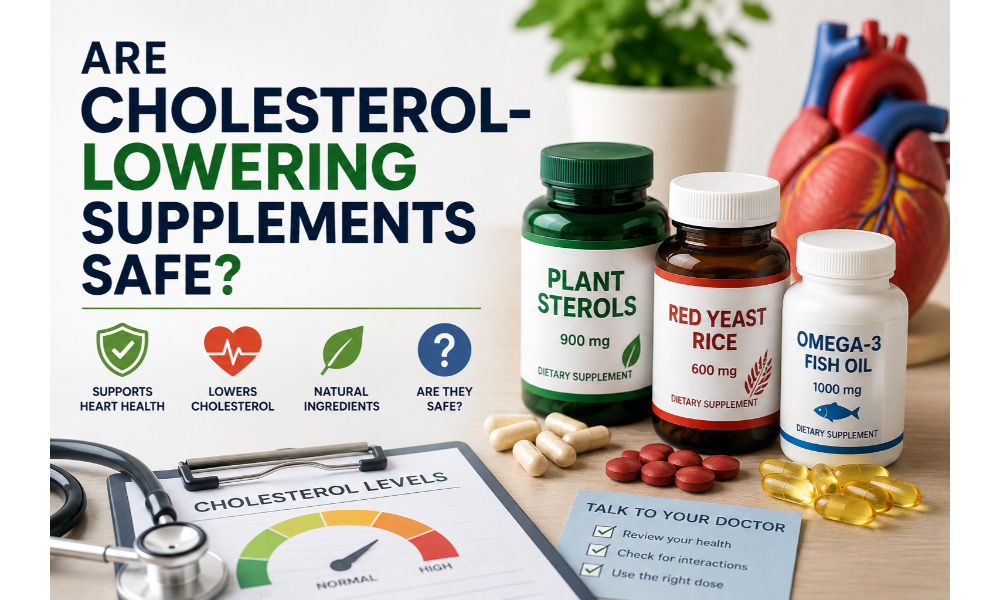
Store shelves are full of supplements promising to lower cholesterol naturally, from red yeast rice to plant sterols and fish oil. For anyone trying to manage their cholesterol without — or alongside — prescription medication, it’s natural to wonder whether these products actually work and whether they’re safe to try. Here’s what the evidence shows, along with important safety considerations before adding any supplement to your routine.
What Are Cholesterol-Lowering Supplements?
Cholesterol-lowering supplements are non-prescription products marketed to help reduce LDL (“bad”) cholesterol, raise HDL (“good”) cholesterol, or lower triglycerides. They range from plant-based compounds like sterols and fiber to more potent options like red yeast rice, which contains a naturally occurring compound chemically similar to a prescription statin.
Which Supplements Have the Most Evidence Behind Them?
Evidence varies significantly between different cholesterol supplements — some are backed by solid clinical research, while others rely mainly on limited or inconsistent studies. The table below summarizes some of the most commonly used options.
| Supplement | Claimed Effect | Evidence Level |
|---|---|---|
| Red Yeast Rice | Lowers LDL cholesterol | Moderate (statin-like compound) |
| Plant Sterols / Stanols | Blocks cholesterol absorption | Moderate to strong |
| Soluble Fiber (psyllium) | Reduces LDL cholesterol | Strong |
| Omega-3 Fatty Acids | Lowers triglycerides | Strong (for triglycerides) |
| Niacin | Raises HDL, lowers LDL | Mixed, high-dose risks |
| Garlic Extract | Modest LDL reduction | Weak / inconsistent |
Is Red Yeast Rice Safe to Take?
Red yeast rice is one of the more potent cholesterol supplements because it naturally contains monacolin K, a compound that is chemically identical to the active ingredient in the prescription statin lovastatin. This means it can carry similar risks to statin medications, including muscle pain and liver effects, but without the same manufacturing standards or dosing consistency. Because of this, red yeast rice should generally not be combined with a prescription statin, and anyone considering it should discuss it with a doctor first.
What Are the Risks of Taking Cholesterol Supplements?
- Potential interactions with cholesterol medications or other prescription drugs
- Inconsistent potency and quality, since supplements aren’t regulated the same way as drugs
- Possible liver or muscle-related side effects, particularly with red yeast rice or high-dose niacin
- A false sense of security that may delay starting more effective, proven treatment when needed
- Lack of FDA approval or rigorous pre-market testing for safety and effectiveness
How Do Supplements Compare to Prescription Cholesterol Medication?
Prescription cholesterol medications, such as statins, go through rigorous clinical testing and FDA review before reaching the market, and their effects on cholesterol levels are well documented and consistent. Supplements, by contrast, are regulated more loosely — manufacturers aren’t required to prove effectiveness before selling a product, which means results can vary widely between brands and even between batches of the same product.
Who Should Avoid Cholesterol-Lowering Supplements?
- Anyone already taking a prescription statin or other cholesterol medication
- People with liver disease or a history of liver problems
- Pregnant or breastfeeding individuals
- Anyone preparing for surgery, since some supplements can affect bleeding risk
- Children, without specific medical guidance
What Should You Discuss With Your Doctor Before Trying a Supplement?
- All medications and supplements you currently take
- Your current cholesterol numbers and treatment goals
- Any history of liver or muscle-related health issues
- Your family history of heart disease or high cholesterol
- What results are realistic to expect from a supplement versus prescription treatment
Frequently Asked Questions
Can supplements replace statins? For people who need significant cholesterol reduction, supplements generally aren’t considered a reliable substitute for prescription statins, which have more consistent, well-documented effects.
Is red yeast rice the same as a statin? It contains a chemically similar compound to a specific statin, but it isn’t regulated, standardized, or tested the same way prescription statins are.
Do cholesterol supplements actually work? Some, like soluble fiber and plant sterols, show fairly consistent modest effects, while others have weaker or mixed evidence behind them.
Are cholesterol supplements FDA-approved? No. Dietary supplements aren’t approved by the FDA in the same way prescription medications are, so their safety and effectiveness aren’t guaranteed.
Can you take fish oil with cholesterol medication? It’s often fine, but high doses can increase bleeding risk or interact with certain medications, so it’s best to confirm with a doctor first.
Some cholesterol-lowering supplements have real, evidence-backed benefits, while others fall short of their marketing claims — and nearly all carry some level of risk, especially when combined with other medications. Talking with a doctor before starting any supplement is the safest way to find an approach that actually supports your heart health.
