

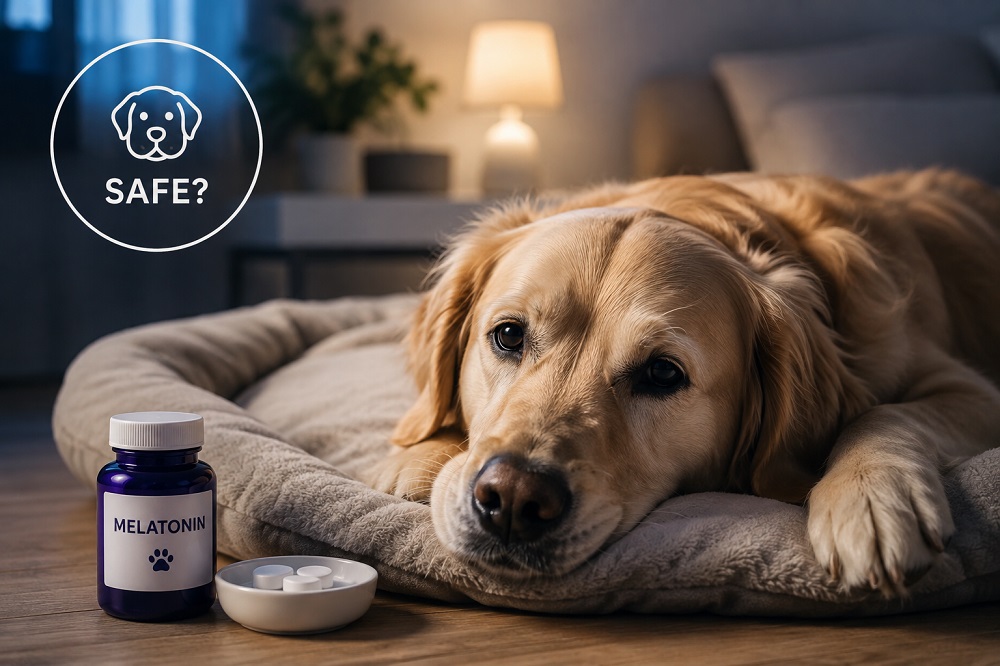
What Does Melatonin Actually Do for Dogs?
Melatonin is a hormone your dog’s body already produces naturally, released by the pineal gland as darkness falls to help regulate the sleep-wake cycle. Because dogs share this same basic biology with humans, supplemental melatonin translates reasonably well between species, which is part of why so many veterinarians reach for it as a first-line, low-risk option before trying stronger prescription sedatives or anti-anxiety medications. Supplemental melatonin is typically used for:
- Anxiety and stress relief, including noise phobias from thunderstorms, fireworks, or car rides
- Sleep disorders, particularly in senior dogs with disrupted sleep-wake cycles or cognitive decline
- Skin and coat issues, such as alopecia X and seasonal flank alopecia
Some vets also use melatonin as a supportive supplement alongside treatment for conditions like Cushing’s disease, where it’s typically one piece of a broader plan rather than a stand-alone fix. Research on melatonin in dogs is still fairly limited compared to research in humans, so most of what’s known comes from clinical experience and small studies rather than large-scale trials, which is one more reason a vet’s judgment matters more than a product label.
How Much Melatonin Can You Give a Dog?
Dosage is based mainly on body weight. Here’s a general starting-point chart vets commonly reference — always confirm the exact amount with your own vet first.
| Dog Size | Approx. Weight | Typical Dose | Best Timing |
| Small | Under 25 lbs | 1 mg | 30–60 min before trigger or bedtime |
| Medium | 25–50 lbs | 1.5–3 mg | 30–60 min before trigger or bedtime |
| Large | 50–90 lbs | 3–6 mg | 30–60 min before trigger or bedtime |
| Giant | Over 90 lbs | Up to 6 mg (vet-guided) | 30–60 min before trigger or bedtime |
Melatonin tablets are usually sold in 1 mg, 3 mg, or 10 mg strengths, so smaller dogs often need a tablet split, which is another reason to loop in your vet before guessing.
How Do You Give Your Dog Melatonin Safely? (5 Steps)
- Confirm with your vet first. Especially important if your dog is a puppy, pregnant, senior, or already on medication.
- Choose a xylitol-free product. Avoid human gummies; opt for a plain tablet or a vet-formulated pet melatonin.
- Weigh your dog. Dosage is calculated by body weight, not guesswork.
- Time it right. Give it 30–60 minutes before a known trigger, like fireworks, or before bedtime for sleep support.
- Watch and log the response. Note any drowsiness, stomach upset, or behavior changes so you can report back to your vet.
Is It Safe to Use Human Melatonin Products on Dogs?
You should never give a dog a melatonin gummy or chewable formulated for humans without carefully checking the label. The concern isn’t melatonin itself; it’s everything else in the product. Many human melatonin gummies contain xylitol, an artificial sweetener that is highly toxic to dogs and can trigger a dangerous drop in blood sugar or even liver failure in relatively small amounts. If you only have a human product on hand, choose a plain tablet with no xylitol, no chocolate coating, and minimal extra ingredients, and treat it as a short-term substitute rather than your go-to option.
What Side Effects Should You Watch For?
- Drowsiness or grogginess, especially the next morning
- Mild stomach upset or gas
- A temporary increase in heart rate
- Changes in fertility in unspayed or unneutered dogs
- Confusion or wobbliness if the dose is too high for your dog’s size
Which Medications Can Interact With Melatonin?
| Medication Type | Why It Matters |
| Benzodiazepines | Can intensify sedation when combined with melatonin |
| Blood thinners (e.g., warfarin) | May increase bleeding risk |
| Blood pressure medication | Melatonin may reduce effectiveness |
| Corticosteroids | May interfere with immune-related effects |
What Mistakes Do Dog Owners Commonly Make?
- Grabbing a gummy from the counter without checking for xylitol
- Guessing the dose instead of calculating it by weight
- Giving melatonin daily long-term without a vet-approved plan
- Expecting melatonin alone to fix severe anxiety instead of pairing it with training support
- Not mentioning existing medications to the vet before adding melatonin to the routine
Are There Natural Alternatives Worth Trying Alongside Melatonin?
Melatonin tends to work best as one part of a broader calming strategy rather than a stand-alone fix. Extending daily walks, adding more mental enrichment through puzzle toys, creating a quiet ‘safe space’ during storms or fireworks, and using calming pressure wraps are all approaches vets often suggest pairing with melatonin. For dogs with more severe or persistent anxiety, a veterinary behaviorist can help build a structured plan that may include training techniques alongside, or instead of, supplements.
Frequently Asked Questions
Can puppies take melatonin?
There isn’t enough research to confirm safety in young puppies, so use only under direct veterinary guidance.
How fast does melatonin work in dogs?
Most dogs show calming effects within 30–60 minutes, which is why timing the dose ahead of a stressful event matters.
Can I give my dog melatonin every night?
Some dogs take it nightly for chronic issues under vet supervision, but it shouldn’t be started as a routine without that guidance.
What if my dog eats too much melatonin?
Mild overdose usually causes lethargy or an upset stomach; contact your vet or a pet poison hotline if a xylitol product was involved.V jn bn
