

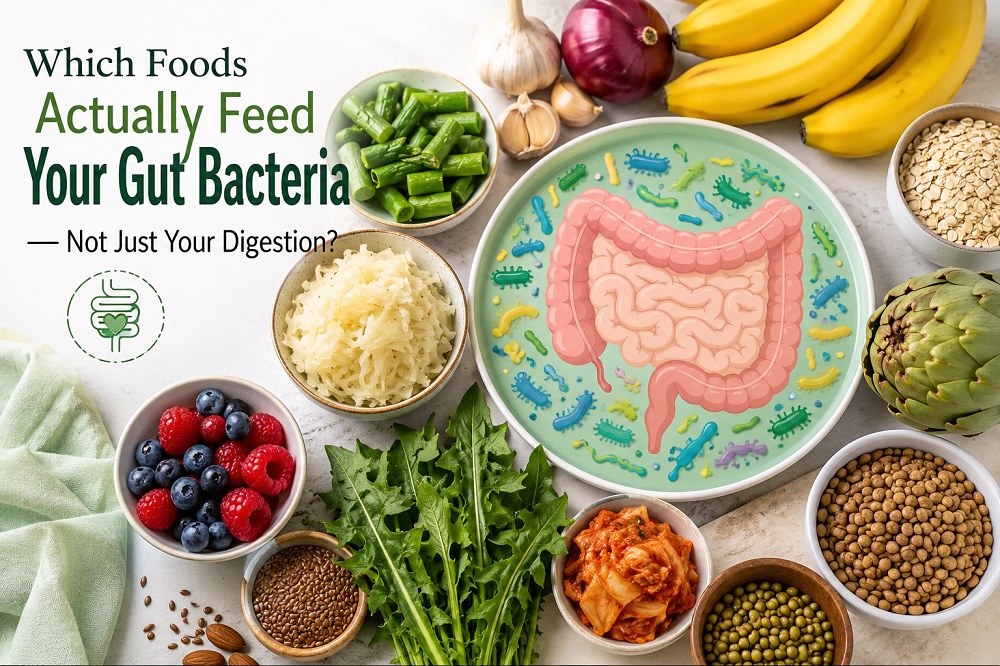
Definition: What Does It Mean to “Feed” Your Gut Bacteria?
Your gut hosts trillions of microbes that survive on undigested carbohydrates — mainly fiber and resistant starch — that reach the colon intact. There, bacteria ferment these compounds into short-chain fatty acids (SCFAs) like butyrate, acetate, and propionate. SCFAs fuel the cells lining your colon, regulate inflammation, and communicate with your immune and nervous systems. A 2025 review from the International Scientific Association for Probiotics and Prebiotics notes that the more diverse a person’s diet, the more diverse their bacterial population tends to be — and diversity is one of the strongest markers of a resilient gut.
Causes of Poor Gut Microbial Health
- Low fiber intake: Most adults in industrialized countries eat roughly half the recommended daily fiber (about 15g vs. the recommended 25–38g), according to ongoing clinical fiber research.
- Low dietary diversity: Eating the same narrow set of foods limits the range of bacterial species that can thrive.
- Ultra-processed food consumption: These foods are typically stripped of fiber and polyphenols microbes need.
- Overuse of antibiotics and chronic stress, which can reduce microbial diversity over time.
- Sedentary lifestyle: Emerging 2026 research links inactivity with low-grade gut inflammation, though pairing fiber with exercise shows stronger improvements than either alone.
Symptoms of an Undernourished Gut Microbiome
- Persistent bloating or irregular bowel habits
- Frequent food sensitivities
- Fatigue or brain fog unrelated to sleep
- Skin flare-ups (eczema, acne)
- Frequent colds or infections
- Sugar cravings (some bacteria thrive on sugar and signal cravings back to the brain)
How Gut Microbiome Health Is Diagnosed
There’s no single “gut health test” doctors universally use, but common approaches include:
- Stool microbiome sequencing — analyzes bacterial species and diversity (mostly research or specialty-lab use).
- Fecal pH and calprotectin tests — indirect markers of fermentation activity and inflammation.
- Clinical symptom review — a doctor assessing bloating, bowel patterns, and diet history.
- Emerging metrics: Researchers in 2025 introduced a “Muc2Plant ratio,” comparing how much of the microbiome digests fiber versus the gut’s own mucus lining — a higher mucus-digesting ratio may signal reduced fiber intake and higher inflammation risk. This isn’t yet a consumer test, but it signals where diagnostics are headed.
Treatment: Foods That Feed Your Gut Bacteria
Prebiotic Foods (fuel for bacteria)
Garlic, onions, leeks, asparagus, oats, green bananas, chicory root, and Jerusalem artichokes contain inulin and resistant starch that specifically feed beneficial strains like Bifidobacteria.
Fermented (Probiotic) Foods
Yogurt with live cultures, kefir, sauerkraut, kimchi, miso, and tempeh introduce live bacteria directly. A well-known Stanford-affiliated trial found fermented foods increased microbial diversity and lowered inflammatory markers over several weeks, while fiber-only diets improved fiber-digesting capacity without the same diversity boost.
Polyphenol-Rich Foods
Berries, extra-virgin olive oil, dark chocolate, and green tea contain plant compounds that partially resist digestion and are metabolized by gut bacteria into anti-inflammatory byproducts.
High-Fiber Whole Foods
Legumes, whole grains, chia and flax seeds, and a wide variety of vegetables supply the fermentable fiber load your microbes need daily.
Comparison Table: Prebiotic vs. Probiotic Foods
| Feature | Prebiotic Foods | Probiotic Foods |
| What they do | Feed existing bacteria | Add new live bacteria |
| Examples | Garlic, onion, oats, bananas | Yogurt, kefir, kimchi, miso |
| Best for | Boosting fiber-fermenters like Bifidobacteria | Introducing diverse live strains |
| Digestive effect | May cause gas short-term (high FODMAP) | Generally gentler on digestion |
| Ideal use | Daily, gradually increased | Daily, rotate fermented sources |
Prevention: Keeping Your Gut Bacteria Well-Fed Long-Term
- Aim for 30 different plant foods per week (a benchmark used in the American Gut Project) rather than fixating on any single “superfood.”
- Prioritize whole, minimally processed carbohydrates over refined ones.
- Introduce fiber gradually to avoid excess bloating.
- Rotate fermented foods rather than relying on one source.
- Limit ultra-processed foods and added emulsifiers, which some research links to disrupted gut lining integrity.
Lifestyle Tips Beyond Food
- Move daily. Combining fiber intake with regular activity shows stronger anti-inflammatory effects than diet changes alone, per 2026 research on sedentary adults.
- Prioritize sleep — gut bacteria follow circadian rhythms and are disrupted by irregular sleep.
- Manage stress, since the gut-brain axis means chronic stress can alter bacterial composition.
- Stay hydrated to support fiber fermentation and regularity.
Expert Recommendations
Gut microbiologists and dietitians consistently emphasize diversity over perfection — no single food or supplement replaces a varied diet. Researchers publishing in nutrition science journals through 2026 point to combining fiber and polyphenol-rich foods together (not fiber alone) as more effective for improving microbiome-linked health markers like cholesterol and inflammation than either eaten separately.
Common Myths About Gut-Healthy Foods
| Myth | Reality |
| “Probiotic supplements are all you need” | Food-based fermented sources plus fiber outperform supplements alone in most studies |
| “More fiber is always better, fast” | Sudden high fiber intake can worsen bloating; gradual increases work better |
| “Yogurt is enough for gut health” | Only live-culture yogurt helps, and diversity of fermented foods matters more than one source |
| “Gut health foods work in days” | Microbiome shifts typically take 2–4 weeks of consistent intake to show measurable change |
| “Gluten-free = gut-healthy” | Removing gluten unnecessarily can reduce fiber intake and microbial diversity |
Daily Gut-Feeding Checklist
☐ At least 1 fermented food (yogurt, kefir, kimchi, sauerkraut)
☐ 2+ servings of legumes, whole grains, or resistant starch
☐ A prebiotic-rich food (garlic, onion, leek, oats)
☐ A polyphenol source (berries, olive oil, green tea)
☐ Varied vegetables across the week (aim for 30 plant types weekly)
☐ Adequate water intake
☐ Some form of daily movement
FAQ Section
What foods feed gut bacteria the most? High-fiber and resistant-starch foods — legumes, oats, garlic, onions, and green bananas — along with fermented foods like kefir and kimchi, provide the most direct fuel and live bacteria for a diverse microbiome.
How long does it take to improve gut bacteria through diet? Most research shows measurable shifts in microbial composition within 2 to 4 weeks of consistent dietary change, though full diversity improvements can take longer.
Are prebiotics or probiotics better for gut health? They serve different roles — prebiotics feed existing bacteria, while probiotics introduce new strains. Research suggests combining both produces stronger results than relying on either alone.
Can eating too much fiber hurt gut health? Increasing fiber too quickly can cause temporary bloating and gas. Gradual increases paired with hydration reduce this effect.
Do fermented foods really increase gut diversity? Yes — clinical research has shown fermented foods can increase microbial diversity and reduce certain inflammatory markers more effectively than fiber alone in some studies.
Is yogurt enough to improve gut health? Live-culture yogurt helps, but relying on a single fermented food limits diversity; rotating multiple fermented sources produces broader microbial benefits.
