

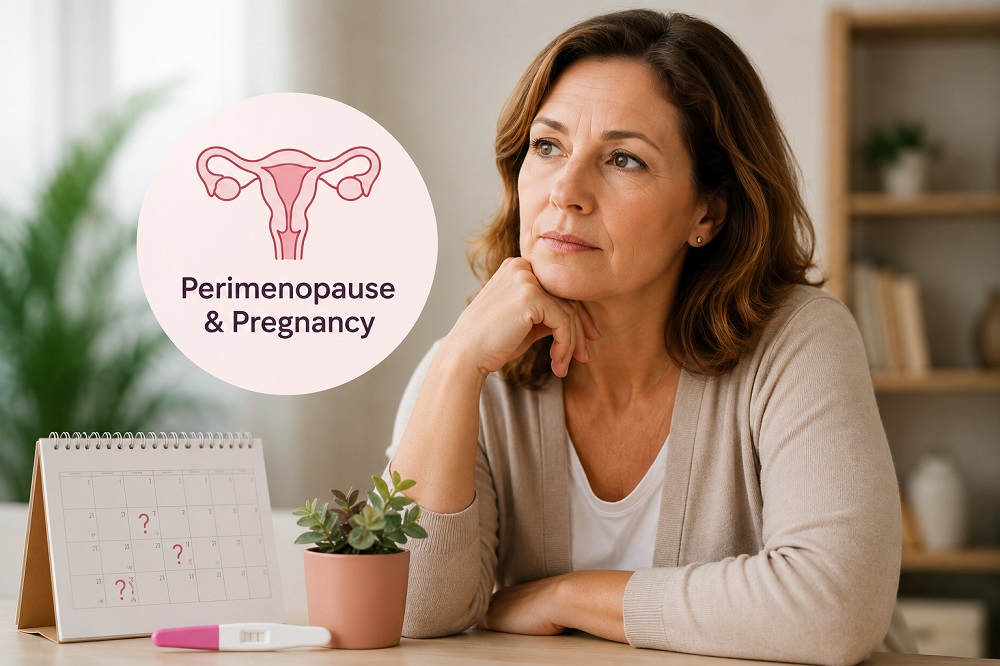
Irregular periods, a missed cycle here and there, hot flashes creeping in. If you’re in your 40s and starting to notice the signs of perimenopause, you might assume pregnancy is off the table. That assumption is one of the most common — and riskiest — misconceptions about this life stage.
You’re not more fertile during perimenopause, but fertility doesn’t go down to zero until you reach menopause. — Ob/Gyn and menopause specialist
Perimenopause is the transitional stretch leading up to menopause, and during it your ovaries are still releasing eggs, just less predictably than before. Until you’ve gone 12 full consecutive months without a period, pregnancy remains possible. During perimenopause, estrogen and progesterone levels fluctuate rather than declining along a steady, predictable line. Some months your ovaries release an egg right on schedule; other months ovulation might happen early, late, or not at all. Hormonal surges can even occasionally trigger the release of more than one egg in a single cycle, which is part of why the odds of a spontaneous twin pregnancy actually increase with age.
What Are the Real Odds of Getting Pregnant, by Age?
| Age Range | Approx. Chance of Pregnancy per Cycle |
| 30s | About 20% |
| Early 40s | About 5–10% |
| Mid-to-late 40s | About 2–5% |
| Around 50 | Less than 1%, but not zero |
These are population averages, not a personal guarantee. Some people maintain relatively strong fertility well into their mid-40s, while others decline much earlier. Hormone testing and a conversation with a provider are the only way to know where you personally stand. A provider can check whether you’re still ovulating, evaluate hormone levels like FSH and AMH, and talk through whether fertility treatment could improve your odds if natural conception isn’t happening.
Myths vs. Facts About Perimenopause and Pregnancy
| Myth | Fact |
| Irregular periods mean you can’t get pregnant. | Ovulation can still happen unpredictably, sometimes more than once in a cycle. |
| You need fertility treatment to conceive in your 40s. | Spontaneous, unassisted pregnancies still happen throughout perimenopause. |
| Perimenopause and menopause are the same thing. | Menopause is only confirmed after 12 full months without a period. |
| Pregnancy after 40 carries no extra risk if you feel healthy. | Risks of miscarriage, chromosomal conditions, and complications rise with age. |
What Are the Risks of Pregnancy During Perimenopause?
- Higher rates of miscarriage, largely tied to age-related chromosomal changes in eggs
- Increased risk of chromosomal conditions in the baby, such as Down syndrome
- Higher likelihood of gestational diabetes and high blood pressure
- Greater risk of preterm birth and low birth weight
- Increased chance of needing a C-section delivery
None of this means a healthy pregnancy in your 40s isn’t possible — plenty of people carry to term with excellent outcomes. It does mean earlier prenatal care and closer monitoring matter more than they might at a younger age, and it’s worth discussing prenatal testing options with your provider as soon as pregnancy is confirmed rather than waiting for a routine appointment further down the line.
Do You Still Need Contraception?
Yes. Doctors generally recommend continuing birth control until you’ve gone a full 12 months without a period. Stopping based on irregular cycles alone is one of the most common ways unplanned pregnancies happen at this stage.
- Hormonal IUDs, which can also manage heavy perimenopausal bleeding
- Low-dose birth control pills, which may smooth out hormonal symptoms too
- Barrier methods, for those who prefer a non-hormonal option
- Permanent options, like tubal ligation, for those done building their family
What Are the Early Signs of Perimenopause?
Perimenopause symptoms vary quite a bit from person to person, but the most commonly reported changes include irregular or unpredictable periods, hot flashes and night sweats, mood swings, sleep disturbances, and changes in libido. Because so many of these symptoms overlap with early pregnancy, like fatigue and missed periods, it’s worth taking a pregnancy test before assuming a skipped cycle is simply perimenopause progressing.
Trying to Conceive? A Quick Timeline by Age
- Under 35: try conceiving naturally for up to a year before seeking fertility testing.
- 35 to 40: check in with a fertility specialist after about six months of trying.
- 40 and older: consider seeing a specialist right away to discuss hormone testing and options like IVF.
What Mistakes Do People Commonly Make?
- Assuming irregular periods mean you’re no longer fertile
- Stopping birth control too early, before menopause is medically confirmed
- Confusing perimenopause with menopause, when they’re medically distinct stages
- Skipping fertility testing when trying to conceive, losing valuable time
- Not seeking prenatal care promptly once a later-in-life pregnancy is confirmed
How Is Perimenopause Different From Menopause?
Perimenopause is the transition; menopause is the destination. Perimenopause can begin as early as your mid-30s or as late as your mid-50s, and on average lasts around four years before periods stop completely, though the timeline varies widely from person to person. Menopause itself is a single point in time, officially marked once you’ve gone 12 consecutive months without a period. Everything before that point, no matter how irregular your cycles become, is still perimenopause, and fertility, however reduced, is still technically part of the picture.
Frequently Asked Questions
Q: How do I know if I’m in perimenopause or pregnant?
A: Symptoms overlap heavily, including missed periods and fatigue, so a pregnancy test and a doctor’s visit are the only reliable way to tell.
Q: Can you get pregnant after menopause?
A: Once you’ve gone 12 consecutive months without a period, natural pregnancy is no longer possible; it’s only achievable through assisted methods like IVF with donor eggs.
Q: How long does perimenopause typically last?
A: It can start as early as your mid-30s or as late as your mid-50s, lasting around four years on average before periods stop completely.
Q: Does irregular ovulation mean lower fertility?
A: Generally yes, but irregular ovulation isn’t the same as no ovulation, so pregnancy remains possible even with unpredictable cycles.
