

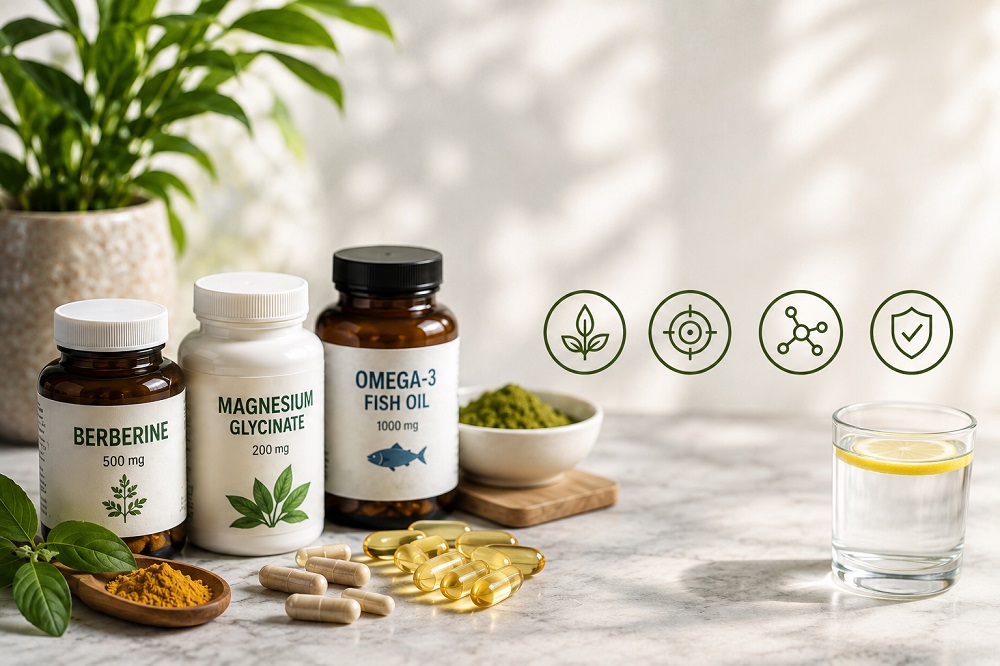
Insulin resistance is one of the most common—and most overlooked—metabolic issues today. Many people carry it for years without a diagnosis, noticing only fatigue after meals, stubborn belly fat, or constant sugar cravings, long before a doctor mentions “prediabetes.”
The encouraging news: insulin resistance can often be improved, and in many cases significantly reversed, through lifestyle changes supported by targeted supplements. This guide covers which supplements actually have research behind them, how they work, and how to use them safely.
This article is educational only and not a substitute for medical advice. Talk to your doctor before starting any supplement, especially if you take diabetes medication.
What Is Insulin Resistance?
Insulin helps glucose from food enter your cells for energy. With insulin resistance, cells stop responding properly, glucose builds up in the blood, and the pancreas produces more insulin to compensate. Over time, this can lead to prediabetes, type 2 diabetes, weight gain (especially around the belly), PCOS, and fatty liver disease.
- Common causes: excess body fat, inactivity, high-sugar diets, chronic stress, poor sleep, and genetics.
- Warning signs: fatigue, sugar cravings, difficulty losing weight, brain fog, and dark skin patches (acanthosis nigricans).
- Diagnosis: fasting insulin, HOMA-IR, HbA1c, or a glucose tolerance test.
Do Supplements Really Help?
Supplements aren’t a cure, but several nutrients and plant compounds are shown in research to improve insulin sensitivity, lower inflammation, and support blood sugar regulation. They work best layered on top of the basics: a whole-food diet, exercise, good sleep, and stress management—not as a standalone fix.
Vitamins Worth Knowing
- Vitamin D – Low levels are strongly linked to insulin resistance; vitamin D receptors on pancreatic cells support healthy insulin secretion.
- Vitamin B1 (Thiamine) – Plays a key role in glucose metabolism and may protect cells from high-blood-sugar damage.
- Vitamin B12 – Important for anyone on metformin, which can deplete B12 over time.
- Vitamin E – An antioxidant that may help counter oxidative stress linked to insulin resistance.
Key Minerals
- Magnesium – The most researched mineral here; it’s essential for glucose metabolism enzymes, and deficiency is closely tied to insulin resistance.
- Chromium – Enhances insulin’s action at the cellular level, though results vary by baseline levels.
- Zinc – Supports insulin production and storage in the pancreas.
- Manganese – Supports enzymes involved in carbohydrate metabolism.
Herbal & Plant-Based Options
- Berberine – One of the most studied natural compounds for blood sugar; activates AMPK, an enzyme that improves glucose uptake, with effects some studies compare to diabetes medications.
- Cinnamon Extract – May slow carb breakdown and improve insulin signaling.
- Fenugreek – High in soluble fiber, which can blunt post-meal blood sugar spikes.
- Bitter Melon – May mimic insulin’s action in the body.
- Gymnema Sylvestre – May reduce sugar absorption and support pancreatic function.
- Ashwagandha – Helps manage cortisol, since chronic stress worsens insulin resistance.
- Turmeric (Curcumin) – Anti-inflammatory properties that target one of the root drivers of insulin resistance.
Amino Acids & Other Compounds
- Alpha-Lipoic Acid (ALA) – A strong antioxidant shown to improve insulin sensitivity.
- Taurine – Supports healthy insulin secretion and protects pancreatic cells.
- L-Carnitine – Supports fat metabolism and glucose utilization.
- Omega-3 Fatty Acids – Reduce inflammation and improve triglyceride levels.
Gut Health & Probiotics
The gut microbiome plays a growing role in insulin resistance research. An imbalanced microbiome can drive inflammation and poor glucose control, while certain probiotic strains have improved insulin sensitivity markers in studies. Prebiotic fibers like inulin and psyllium feed good bacteria and may also slow glucose absorption.
Quick Comparison Table
| Supplement | Mechanism | Best For | Note |
| Magnesium | Glucose metabolism cofactor | Confirmed deficiency | Choose glycinate/citrate forms |
| Berberine | Activates AMPK | Significant insulin resistance | Can interact with diabetes meds |
| Vitamin D | Supports beta-cell function | Low blood levels | Test levels before high doses |
| Chromium | Enhances insulin receptors | Mild-moderate cases | Effects vary by baseline status |
| Alpha-Lipoic Acid | Antioxidant, insulin signaling | Oxidative stress | May amplify medication effects |
| Ashwagandha | Lowers cortisol | Stress-driven cases | Avoid with certain thyroid conditions |
| Omega-3 | Reduces inflammation | General support | Choose a tested fish oil |
| Probiotics | Improves gut balance | Gut-related issues | Strain-specific results |
Choosing the Right Supplement
- Look for third-party testing (USP, NSF).
- Check bioavailability (e.g., magnesium glycinate over oxide).
- Introduce one supplement at a time to track effects.
- Talk to your doctor first if you’re on insulin or metformin.
- Watch for interactions—berberine, ALA, and chromium can lower blood sugar significantly alongside medication.
Lifestyle Still Matters Most
Supplements work best alongside:
- A whole-food, lower-glycemic diet
- Regular strength training (muscle is a major site of glucose disposal)
- Consistent, quality sleep
- Stress management practices
- Optional: time-restricted eating or intermittent fasting
Safety & Precautions
- Pregnant or breastfeeding women should avoid berberine, high-dose fenugreek, and bitter melon unless cleared by a doctor.
- Use caution with kidney/liver conditions and high-dose supplements.
- Combining multiple blood-sugar-lowering supplements with medication raises hypoglycemia risk—watch for shakiness, sweating, or confusion.
- Always introduce new supplements gradually and inform your doctor.
FAQs
Can insulin resistance be fully reversed?
Often yes, especially when caught early and paired with sustained lifestyle change and supplementation.
How long until supplements work?
Most studies show benefits after 8–12 weeks of consistent use.
What’s the single best supplement?
No universal answer, but magnesium and berberine have the strongest research support for confirmed deficiency or significant resistance.
Are these safe with diabetes medication?
Some are, but many require dose adjustments under medical supervision—never combine without your doctor’s input.
Can I take several together?
Generally yes, but introduce them one at a time and avoid stacking too many blood-sugar-lowering compounds at once.
Conclusion
Reversing insulin resistance isn’t about one miracle pill—it’s about supporting your metabolism from multiple angles. Vitamin D, magnesium, berberine, ashwagandha, and gut-supporting probiotics all have real research behind them, but they work best combined with real food, movement, sleep, and stress management. If you suspect insulin resistance, start with a conversation with your doctor before adding any supplement to your routine.
