

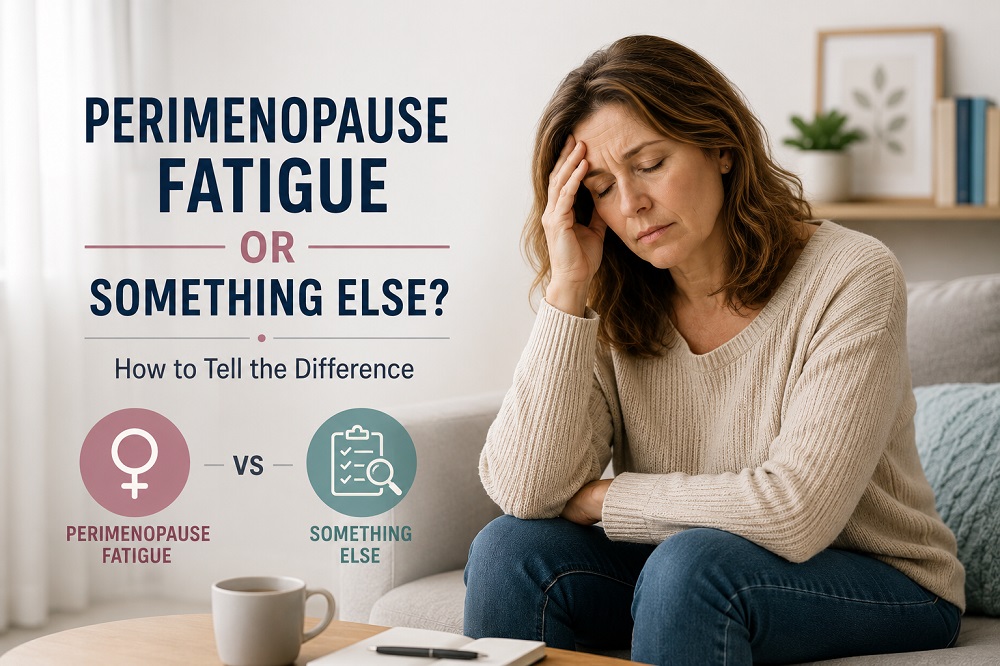
If you’re in your 40s and feel tired in a way that sleep doesn’t fix, you’re not imagining it. Fatigue is one of the most common — and most dismissed — symptoms of perimenopause. Here’s how to tell whether it’s hormonal, and what actually helps.
What Is Perimenopause?
Perimenopause is the transitional stage leading up to menopause, when the ovaries gradually produce less estrogen and progesterone. It typically begins in a woman’s 40s, though it can start in the late 30s, and can last anywhere from a few years to over a decade before periods stop entirely. Unlike the steady decline most people picture, hormone levels during this phase swing unpredictably — sometimes spiking higher than normal one week and dropping sharply the next.
Does Perimenopause Cause Fatigue?
Yes. Fatigue is one of the most frequently reported perimenopause symptoms, right alongside hot flashes, mood changes, and irregular periods. It’s a direct physiological effect of shifting hormones and disrupted sleep — not simply a byproduct of being busier or getting older.
Why Hormonal Changes Can Make You Feel Exhausted
Three hormonal systems are involved, and understanding each helps explain why the fatigue feels so different from ordinary tiredness.
Estrogen and Energy Regulation
Estrogen helps regulate serotonin and dopamine, brain chemicals tied to mood, motivation, and energy. As estrogen fluctuates and eventually declines, many women notice a drop in mental energy and motivation that mirrors the hormonal shift.
Progesterone and Sleep Quality
Progesterone has a naturally calming, sleep-promoting effect on the brain. In sleep studies, progesterone has been shown to increase deep sleep and reduce time spent awake after falling asleep. As progesterone production becomes irregular during perimenopause, this built-in sleep support weakens, leading to lighter, more fragmented sleep.
Cortisol and Stress Response
Cortisol, the body’s main stress hormone, can also become dysregulated during this transition. Elevated evening cortisol interferes with the ability to fall and stay asleep, compounding next-day exhaustion — especially when combined with the sleep-disrupting effects of low progesterone.
Common Symptoms That Often Occur Alongside Fatigue
Perimenopause fatigue rarely shows up alone. It’s commonly accompanied by night sweats, brain fog, irritability, anxiety, and reduced motivation. This symptom cluster is one of the clearest signs that fatigue is hormonally driven rather than simply the result of a busy schedule.
Fatigue vs. Normal Tiredness: What’s the Difference?
| Feature | Normal Tiredness | Perimenopause Fatigue |
| Cause | Poor sleep, busy day | Hormonal fluctuation |
| Relief | Improves with a good night’s rest | Persists even after adequate sleep |
| Pattern | Occasional | Daily or near-daily |
| Related symptoms | None specific | Hot flashes, brain fog, mood shifts |
| Timing | Any age, any time of life | Typically 40s, alongside cycle changes |
Other Causes of Fatigue During Perimenopause
Not every case of fatigue at this age is purely hormonal. The following conditions commonly overlap with perimenopause and can either cause or worsen fatigue on their own.
Thyroid Dysfunction
An underactive thyroid produces fatigue, brain fog, and low mood that closely mirror hormonal fatigue, making it one of the most important conditions to rule out with bloodwork.
Iron-Deficiency Anemia
Heavier or more frequent periods, common during perimenopause, can lead to iron-deficiency anemia — a direct and easily treatable cause of persistent tiredness.
Insulin Resistance
Metabolic changes during this life stage can increase insulin resistance, which is linked to fatigue, energy crashes, and disrupted sleep. This overlap is exactly why fatigue that doesn’t improve with lifestyle changes deserves a proper medical workup rather than being chalked up to “just perimenopause.”
How Sleep Changes Affect Energy Levels
Research on perimenopausal sleep consistently finds reduced sleep efficiency and more frequent nighttime awakenings, driven by a combination of hormone fluctuations, night sweats, and circadian shifts. Notably, some women show these sleep disruptions on lab testing even before they consciously notice a problem — meaning the fatigue can show up before the sleep issue feels obvious. This is a key reason perimenopause fatigue can feel disproportionate to how many hours of sleep someone actually logs.
Practical Ways to Manage Perimenopause Fatigue
A consistent sleep and wake time, even on weekends, helps stabilize a circadian rhythm that hormonal shifts are already disrupting. Morning sunlight exposure reinforces that rhythm further. Limiting caffeine and alcohol in the evening reduces both sleep fragmentation and night sweats. Regular movement — even a daily 20–30 minute walk — has been shown to improve sleep quality and daytime energy more reliably than rest alone, since exercise helps regulate cortisol patterns over time.
Foods and Lifestyle Habits That May Help
Protein-rich, balanced meals help prevent the blood sugar swings that can worsen fatigue and irritability. Staying well hydrated supports overall energy metabolism. Reducing late-afternoon and evening caffeine is particularly useful, since caffeine can intensify night sweats and further fragment already-disrupted sleep.
When to Talk to a Healthcare Professional
Fatigue that’s severe, doesn’t improve with better sleep habits, or comes with symptoms like unexplained weight change, unusually heavy bleeding, or persistent low mood warrants a visit to a doctor. Bloodwork can rule out thyroid dysfunction, anemia, and other overlapping conditions, and a healthcare provider can also discuss whether hormone therapy is appropriate for managing more severe symptoms.
FAQ Section
Is fatigue a normal perimenopause symptom? Yes — it’s among the most commonly reported symptoms, driven by fluctuating estrogen, progesterone, and cortisol.
How is perimenopause fatigue different from just being tired? Perimenopause fatigue tends to persist even after a full night’s sleep and is usually accompanied by other symptoms like hot flashes, brain fog, or mood changes — normal tiredness typically resolves with rest alone.
How long does perimenopause fatigue last? It varies by individual and often eases as hormone levels stabilize after menopause, though this transition can span several years.
Can perimenopause fatigue be treated? Yes — sleep hygiene changes, regular exercise, and in some cases hormone therapy can meaningfully reduce it. A doctor can help determine the right approach based on symptom severity.
Key Takeaways
Perimenopause fatigue is a real, hormonally driven symptom — not a personal failing or simply “getting older.” It’s distinguished from ordinary tiredness by how persistent it is and by the other symptoms that tend to travel with it, like hot flashes and brain fog. Ruling out thyroid issues and anemia, prioritizing consistent sleep habits and movement, and talking to a doctor when fatigue is severe are the most effective next steps toward feeling like yourself again.
