

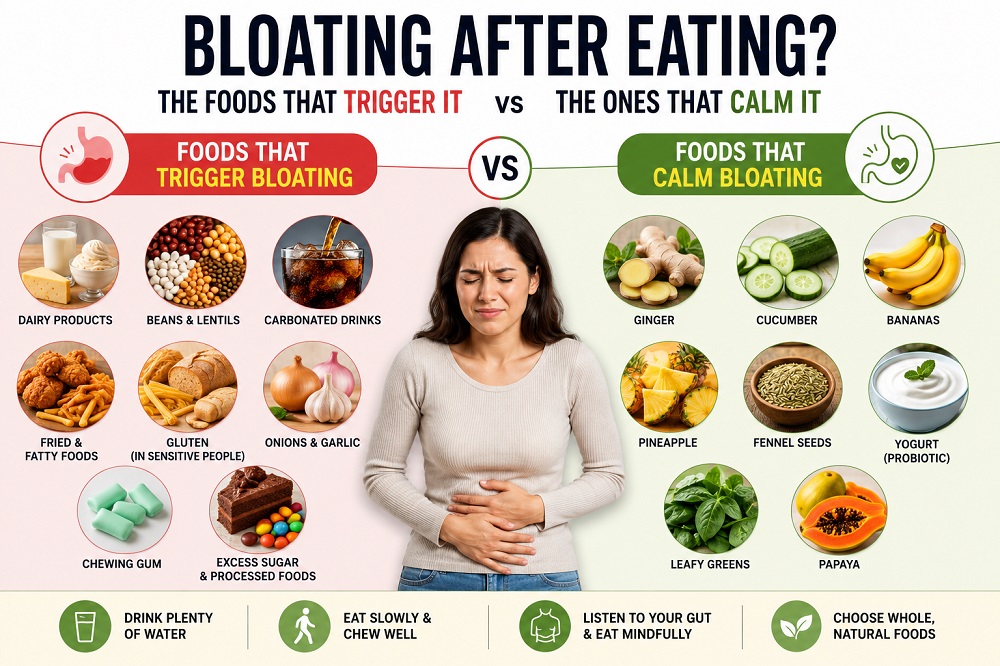
You finish a meal, and within the hour your stomach feels tight, round, and uncomfortable — sometimes even painful. If this happens often, it’s not “just something you ate.” It’s usually a specific, predictable reaction between certain foods and your digestive system. The good news: once you know which foods trigger it and which foods calm it, bloating becomes far more manageable.
Early Signs of Bloating After Eating
Bloating rarely appears out of nowhere — it usually builds gradually during or right after a meal. Catching it early makes it easier to identify the cause.
- A feeling of tightness or fullness in the upper stomach within 30–90 minutes of eating
- Mild pressure or a “stretched” sensation around the belly button
- Needing to loosen your waistband before the meal is even finished
- Quiet gurgling or rumbling sounds shortly after eating
- A visible slight rounding of the belly, even in people who are otherwise lean
Example: Maria, a 34-year-old office worker, noticed her stomach would balloon out about 45 minutes after her regular lunch salad with beans and apple slices — both common high-FODMAP foods — even though the salad looked “healthy.”
Common Symptoms
- Visible abdominal swelling or a “food baby” appearance
- Excess gas or frequent burping
- Dull, cramp-like discomfort in the lower abdomen
- Feeling uncomfortably full after a normal-sized meal
- Fatigue or sluggishness shortly after eating
Less-Known Symptoms
These symptoms are just as common but rarely get connected back to bloating, so people often overlook the link.
- Shoulder or upper back tightness (referred pressure from a distended stomach)
- Brain fog or difficulty concentrating shortly after meals
- Shortness of breath when bloating pushes up against the diaphragm
- Skin breakouts that flare after certain trigger meals
- Disrupted sleep when bloating occurs after dinner
Foods That Commonly Trigger Bloating
Most bloating-trigger foods fall into the FODMAP category — short-chain carbohydrates that resist digestion and get fermented by gut bacteria, producing gas. According to clinical research, this fermentation process increases fluid and gas in the intestines, causing the stretching sensation known as bloating.
- Beans and lentils (high in fermentable oligosaccharides)
- Onions and garlic (rich in fructans)
- Cruciferous vegetables — broccoli, cabbage, cauliflower
- Carbonated drinks and sugar-free gum (swallowed air and sugar alcohols)
- Dairy, for those with lactose intolerance
- Wheat-based foods, especially in people sensitive to fructans, not just gluten
Real-life example: James noticed heavy bloating after his usual chili-and-beans dinner but felt completely fine on nights he ate rice and grilled chicken instead — a classic high-FODMAP vs. low-FODMAP contrast.
Foods That Help Calm Bloating
- Ripe bananas and blueberries (low-FODMAP fruit options)
- Rice, oats, and quinoa (gentler grains than wheat for sensitive digestion)
- Ginger and peppermint tea (traditionally used to ease gas and speed stomach emptying)
- Cucumber, zucchini, and carrots (low-FODMAP vegetables)
- Plain, lactose-free yogurt with live cultures
- Fennel seeds, often chewed after meals in many cultures to reduce gas
Trigger Foods vs. Calming Foods at a Glance
| Category | Common Trigger Foods | Calming Alternatives |
| Vegetables | Broccoli, cabbage, onion, garlic | Carrots, cucumber, zucchini |
| Fruits | Apples, pears, watermelon | Bananas, blueberries, oranges |
| Grains | Wheat bread, pasta | Rice, oats, quinoa |
| Dairy | Milk, soft cheese | Lactose-free yogurt, hard cheese |
| Drinks | Soda, sparkling water | Ginger tea, peppermint tea |
Common Mistakes People Make
- Cutting out all fiber at once instead of identifying the specific trigger — this often worsens constipation-related bloating.
- Blaming the most recent meal, when the real trigger was eaten hours earlier (gas from fermentation can take several hours to build).
- Drinking carbonated “digestive” drinks to settle the stomach, which actually adds more gas.
- Eating “healthy” salads loaded with high-FODMAP ingredients (beans, apple, onion) and assuming bloating means the food was bad for them.
- Starting a strict low-FODMAP diet long-term without reintroducing foods — this can unnecessarily limit nutrition and gut microbial diversity.
When to See a Doctor
Occasional bloating after a big or unusual meal is normal. But certain patterns point to something that needs medical attention rather than a food swap.
- Bloating that is new, worsening, or doesn’t improve with dietary changes
- Unexplained weight loss alongside bloating
- Blood in the stool or persistent, severe abdominal pain
- Bloating paired with frequent diarrhea or constipation lasting weeks
- Symptoms that disrupt daily life, sleep, or work
Doctors may check for conditions like IBS, SIBO (small intestinal bacterial overgrowth), lactose intolerance, or thyroid issues, since research shows bloating is the most common symptom in functional gut disorders such as IBS, and dietary triggers are reported by the majority of IBS patients.
Myths vs Facts
| Myth | Fact |
| Bloating always means you ate something “bad” | Many trigger foods (beans, garlic, apples) are nutritious; bloating reflects fermentation, not food quality |
| Cutting carbs stops bloating for good | Only specific fermentable carbs (FODMAPs) tend to trigger it — not all carbs |
| Drinking soda helps you burp out the bloat | Carbonated drinks usually add more gas and worsen bloating |
| You should avoid all high-fiber foods if you bloat | Gradual, consistent fiber intake usually reduces bloating over time |
| Bloating is always digestive, never serious | Persistent or worsening bloating can signal IBS, SIBO, or other conditions needing evaluation |
FAQ Section
Why do I bloat after eating certain healthy foods? Many healthy foods like beans, garlic, and apples are high in FODMAPs — carbohydrates that resist digestion and get fermented by gut bacteria, producing gas and bloating, even though the food itself is nutritious.
What foods reduce bloating fast? Ginger tea, peppermint tea, ripe bananas, cucumber, and plain low-FODMAP foods tend to ease bloating faster than high-fiber or fermentable foods.
How long does bloating last after eating? Typical post-meal bloating develops within 30 to 90 minutes and usually settles within a few hours as digestion and gas movement complete.
Is bloating after every meal normal? Occasional bloating is normal, but bloating after nearly every meal often points to a specific food intolerance, IBS, or SIBO and is worth discussing with a doctor.
Does drinking water help with bloating? Yes — adequate water supports digestion and helps move fiber and gas through the gut, which can reduce bloating, especially when fiber intake is high.
Can stress cause bloating after eating? Yes — stress affects gut motility and sensitivity through the gut-brain axis, which can make bloating worse even when the meal itself wasn’t a typical trigger.
Final Summary
Bloating after eating usually isn’t random — it’s a fairly predictable response to specific fermentable carbohydrates, swallowed air, or digestive sensitivity. Identifying your personal trigger foods (often beans, onions, wheat, or carbonated drinks) and swapping in calming alternatives (bananas, rice, ginger tea, low-FODMAP vegetables) can reduce most everyday bloating. The key mistakes to avoid are over-restricting your diet, blaming the wrong meal, and ignoring bloating that’s severe, persistent, or paired with other warning signs. When in doubt, a simple food-and-symptom diary — paired with a doctor’s evaluation if symptoms persist — is the most reliable way to get answers.
